Reel Vs Story: Which Format Should You Use?
Updated June 2026.
When you’re deciding between a reel and a story, the simplest rule is this: use a reel for discovery, use a story for interaction, and use both when one idea needs reach and response. That choice matters because the wrong format can bury a strong idea, while the right one can give the same content a much stronger result.
If you’re planning social media content for a brand, the format is part of the strategy, not just the wrapper. A feed post, a story, and a reel each do a different job, so the best choice depends on the outcome you want. If you need a broader planning lens, social media content and social media strategy both start with the same question: what should the audience do next?
In this guide, I’ll break down the difference between a reel and a story in plain English, show where each format performs best, and give you a fast way to choose the right one without overthinking it. If you’ve ever asked yourself, “Should this live as an Instagram reel or story?” this is the decision framework you need.
Reels Vs Stories On Instagram: Main Differences
Use reels when the goal is discovery, and use stories when the goal is a conversation. Reels are built for broader reach and longer shelf life, while stories are built for faster, follower-first interaction.
That split is the easiest way to think about instagram marketing. Reels are the format you want when a piece of content can keep working after publication. Stories are the format you want when the message has a short window, needs a response, or should feel more immediate.
Instagram Story
A story is the better choice when the job is to speak directly to people who already follow you. Stories are temporary, interactive, and ideal for updates that should feel current rather than polished.
According to Instagram Help Center, stories disappear after 24 hours unless saved to highlights, and video stories can run up to 60 seconds per clip. That makes stories a strong fit for announcements, quick feedback loops, limited-time offers, and behind-the-scenes moments that do not need a permanent home.
Stories also favor action over passive viewing. Use them when you want replies, taps, votes, or link clicks. The current story toolkit includes:
- Poll stickers for quick opinion checks.
- Question stickers for open-ended feedback.
- Emoji sliders for lightweight reactions.
- Link stickers for traffic and conversions.
- Quiz stickers for simple engagement.
- Music, text, and GIFs for faster, more casual communication.
Instagram Reel
A reel is the better choice when the job is to reach beyond your current audience. Reels are discoverable, evergreen, and better suited to content that can keep earning views after the first day.
Instagram now allows reels up to 3 minutes long, which gives brands more room than the old short-form limit. In practice, though, shorter reels still need a tight hook and a clear point. Reels are strongest for educational content, product demos, trend participation, and any message that benefits from being replayed, saved, or shared.
If you want the most current guidance on format mechanics, instagram reels should be treated as a discovery format first and a video container second. The strongest reels usually combine a fast opening, a single takeaway, subtitles, and a clear visual payoff.
Quick Comparison Table
| Factor | Reel | Story |
|---|---|---|
| Lifespan | Lasts beyond the first day and can keep circulating | Disappears after 24 hours unless saved |
| Main Audience | New people and existing followers | Existing followers, or a close audience |
| Best When | Discovery, education, and evergreen value matter | Urgency, response, and relationship building matter |
| Engagement Style | Likes, comments, shares, saves | Replies, taps, stickers, and link clicks |
| Discoverability | Higher, because of Explore and reel surfaces | Lower, unless saved, reshared, or highlighted |
| Best Use Case | Tutorials, trends, product stories, and brand reach | Updates, polls, offers, and behind-the-scenes content |
If you are choosing between a reel and a story in one sentence, the answer is simple: choose the format that matches the audience behavior you want to trigger.
Which Format Gets More Views And Engagement?
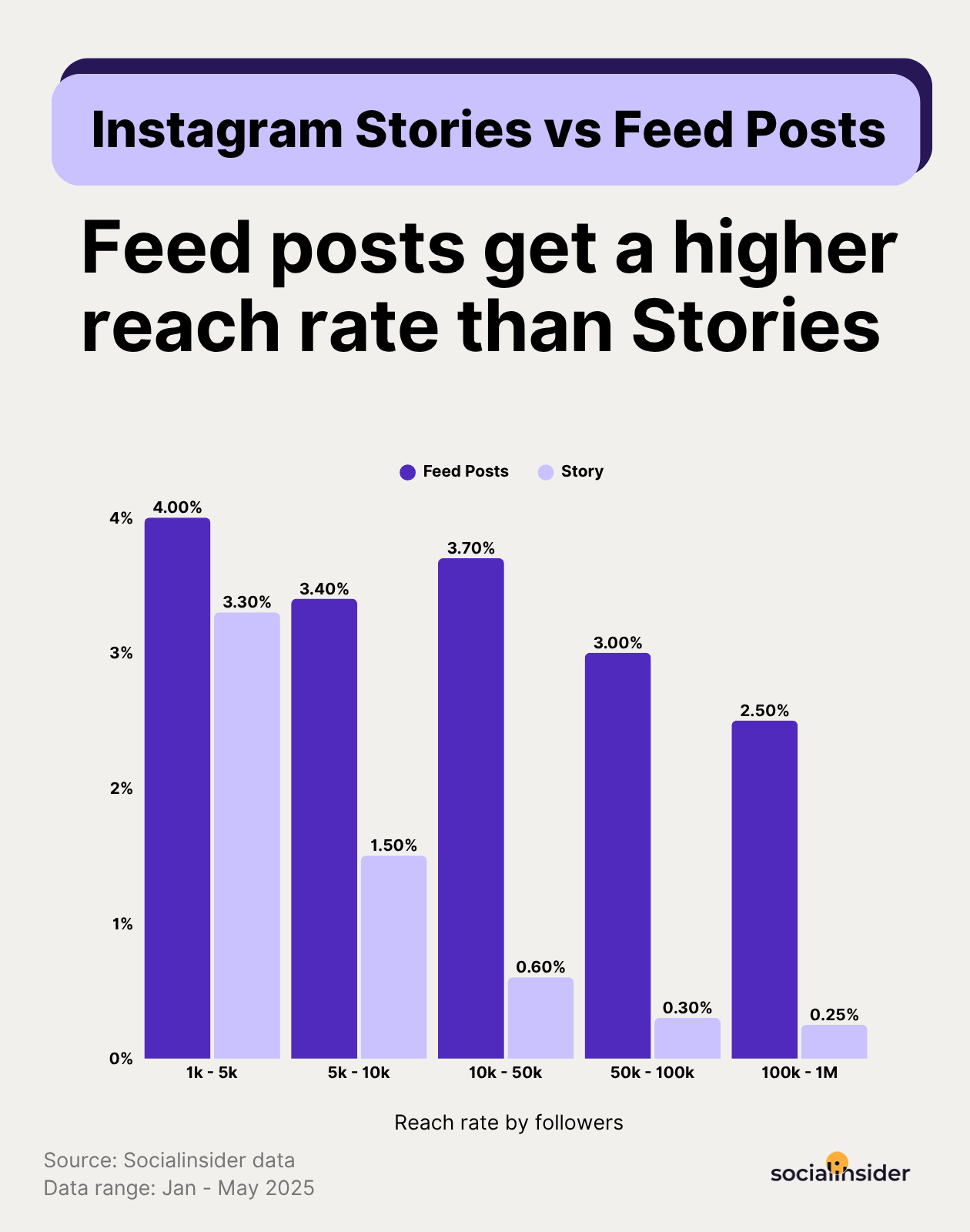
Reels usually win on reach, while stories usually win on depth of interaction. That does not make stories weaker; it just means stories and reels are serving different jobs.
The benchmark data supports that split. Socialinsider’s live Instagram data shows an average engagement rate of 4.93 percent across posts since January 2025. Socialinsider’s reel benchmarks also show that engagement rate changes by audience size, with 0.87 percent for accounts under 5k followers, 0.50 percent for 50k to 100k, and 0.45 percent for 100k to 1M. For stories, Socialinsider’s guidance puts 5 to 10 percent follower reach in the reasonable range, with 15 percent plus considered strong.
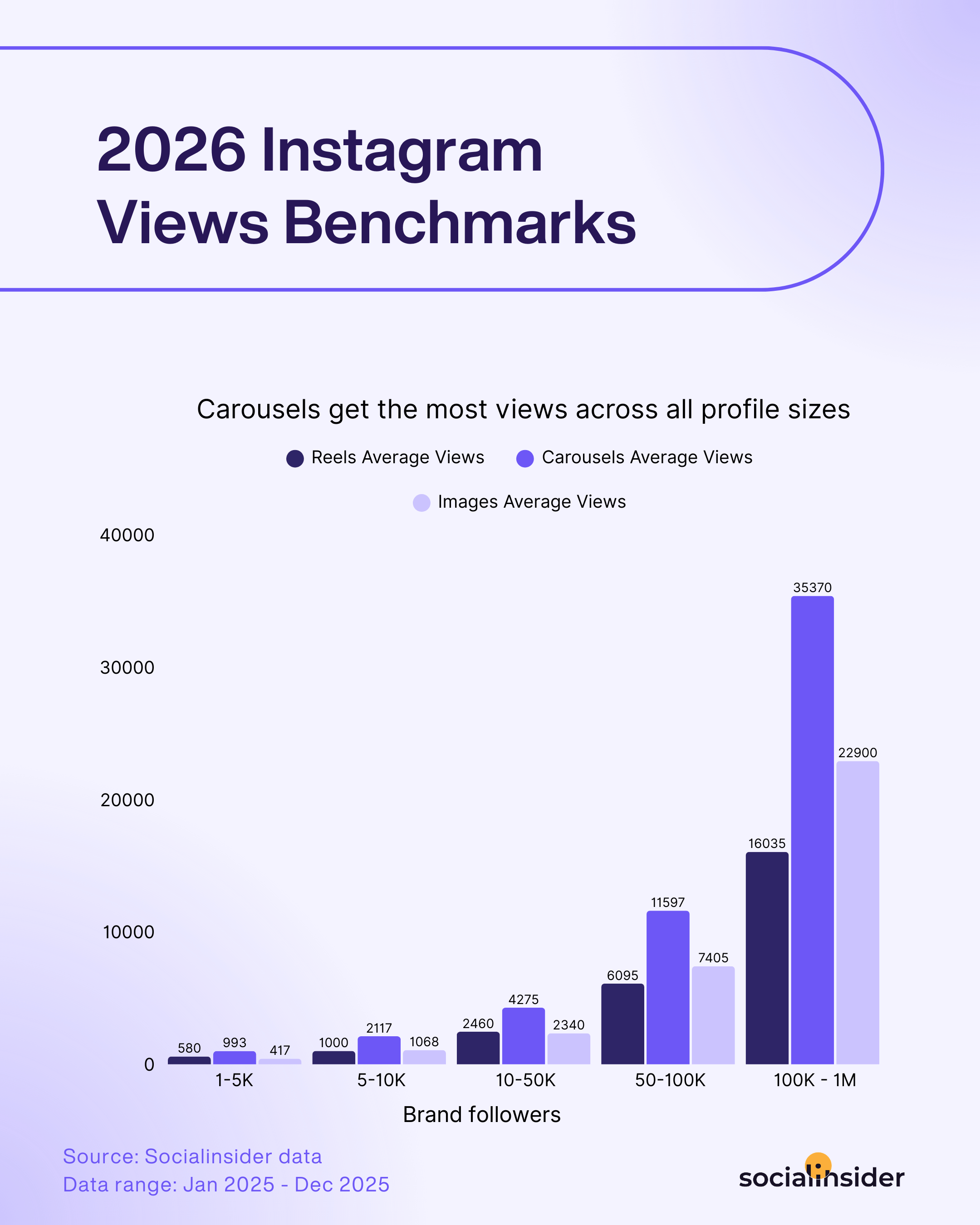
That gives you a practical rule: reels are better for getting discovered, and stories are better for starting a response among people who already know you. A reel can help a new audience find the brand. A story can help a warm audience move from passive viewing to tapping, replying, or clicking.
Adam Mosseri framed the reel side of that equation clearly: “We’ve heard a lot of feedback from a lot of you creators out there that 90 seconds is just too short. So we’re hoping that upping that limit up to three minutes will help you tell the stories that you really want to tell,” said Adam Mosseri, Head of Instagram. The message is simple: reels are now spacious enough for better storytelling, but they still work best when the content is built for discovery.
If you want to benchmark your own mix more precisely, social media analytics tools can show whether views, saves, replies, or exits are moving in the right direction. That matters because a high-view reel and a high-response story can both be wins, just in different ways.
When To Choose A Reel
Use a reel when the content should travel beyond your current followers. Reels are the format for discovery, and the strongest brands use them when they want a message to have a second life after publication.
Build Brand Visibility
Use reels for visibility when brand awareness matters more than immediate conversation. Reels are the best choice when you want new people to see your brand, remember your name, or find your account through non-follower surfaces.
A Morgan Stanley survey, reported by Business Insider, found that 74 percent of Instagram users use Reels. That is a useful signal for teams deciding where top-of-funnel content belongs. If the audience is already spending time in the reel experience, a brand has a better chance of entering the discovery flow.
Use reels for:
- Brand introductions.
- Product teasers.
- Thought leadership clips.
- Customer proof.
- Simple educational content that can stand alone.
Tap Into Trends
Use reels for trends when the trend can amplify the brand message instead of distracting from it. Reels are the fastest way to join a conversation that is already moving.
According to Socialinsider’s Reels guidance, the best-performing reel lengths sit around 60 to 90 seconds, but trend-driven reels often need to be much shorter to land quickly. That means the hook matters even more when the idea is tied to trending audio, a popular format, or a timely cultural moment.
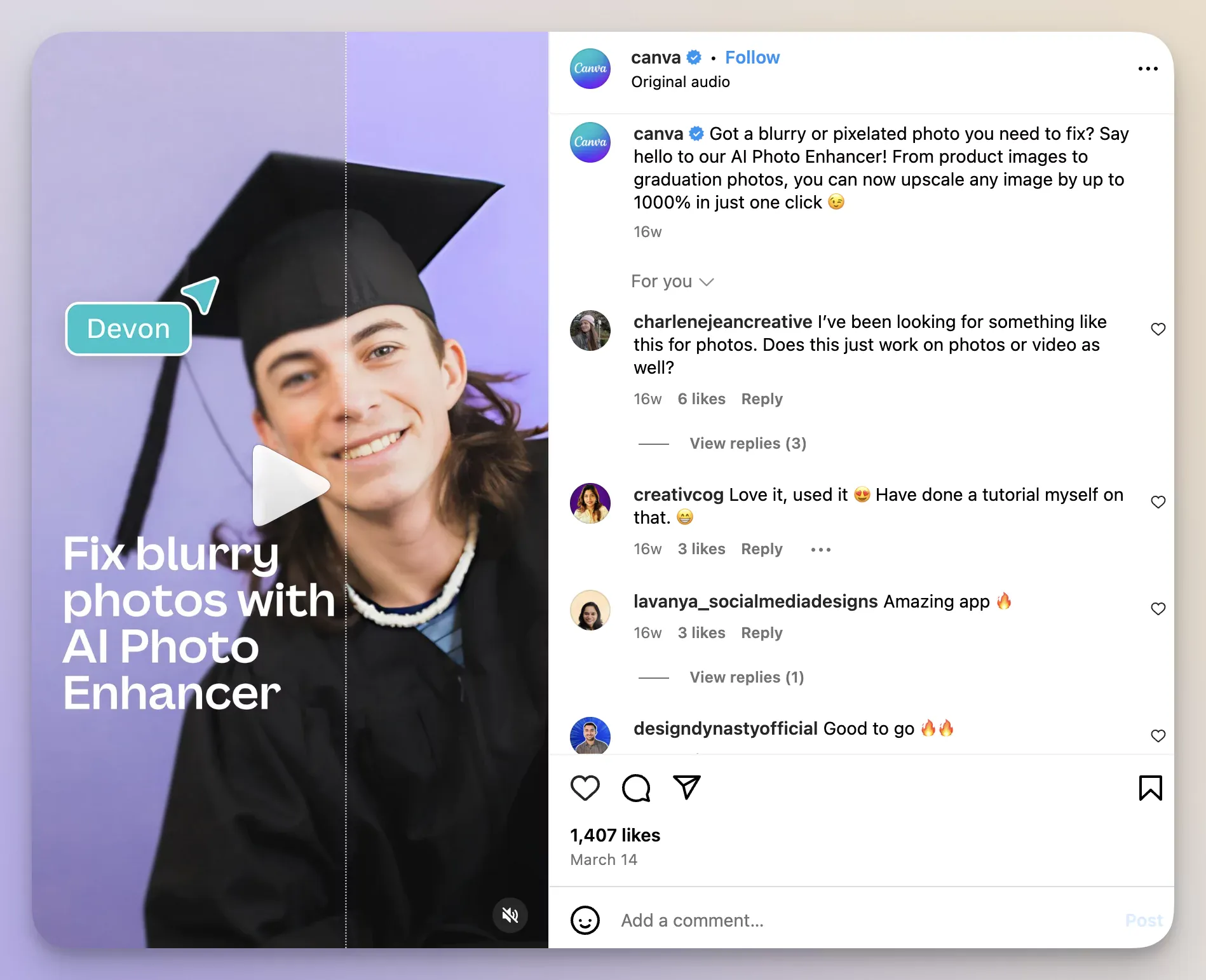
Try this structure:
- Lead with the trend in the first second.
- Connect the trend to a real audience problem.
- Keep the message tight.
- Add subtitles so the point lands without sound.
- Use trending audio only when the sound supports the story.
Create Educational Content
Use reels for education when the lesson should stay useful after the day it is posted. Reels are especially strong for tutorials, quick explainers, product walkthroughs, and “how it works” content.
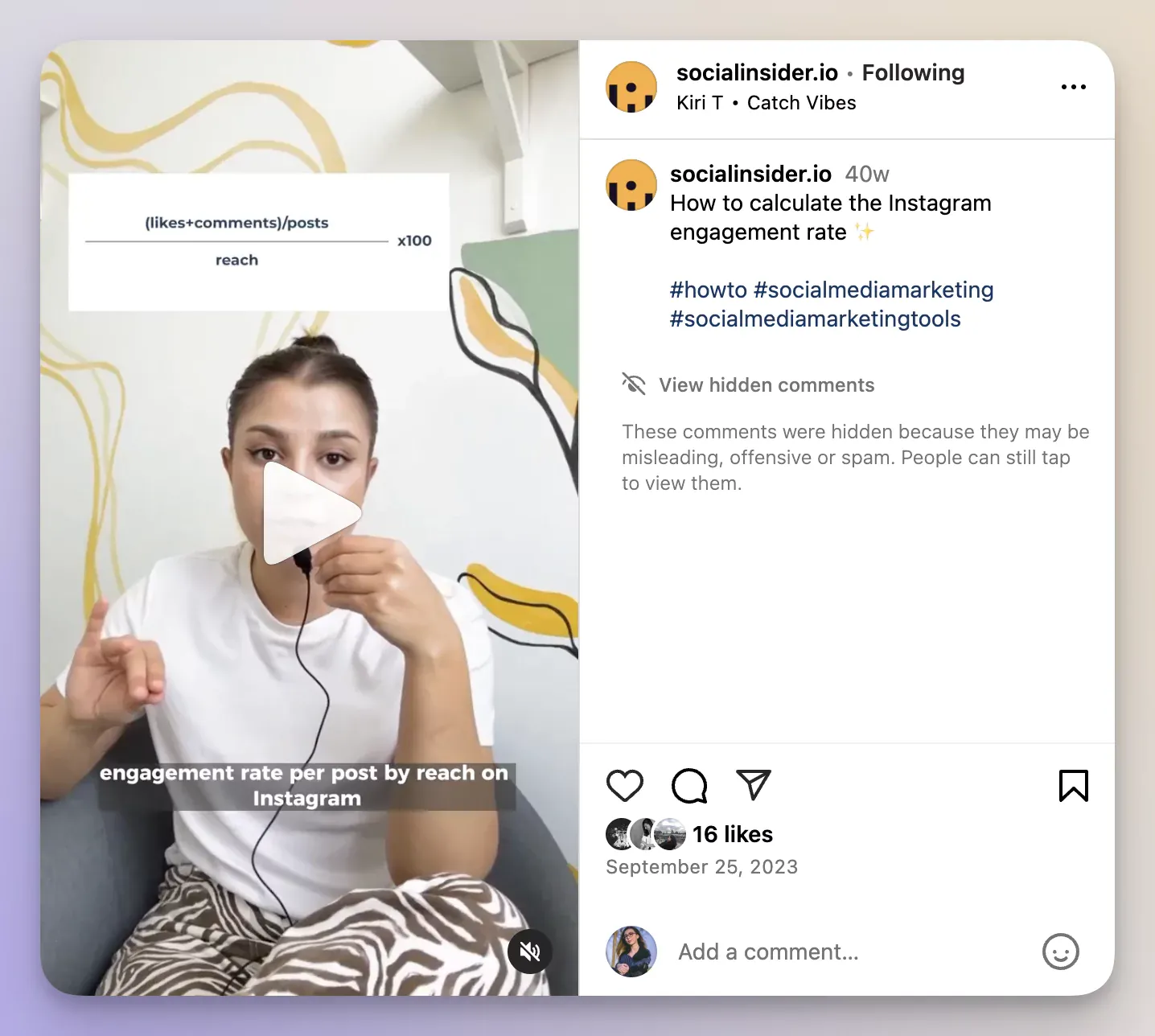
Educational reels work because they combine clarity and replay value. Someone may save the video today, watch it again next week, and share it with a teammate later. That gives the format a longer tail than a story, which is exactly why educational content belongs in reels when the topic has lasting value.
A good test is simple: if the audience will still need the information next month, make a reel. If the information will feel stale tomorrow, make a story.
Showcase Brand Personality
Use reels for personality when the brand voice deserves a bigger stage than a quick update. Reels are ideal for showing how a team thinks, what a brand stands for, or what makes the company feel human.
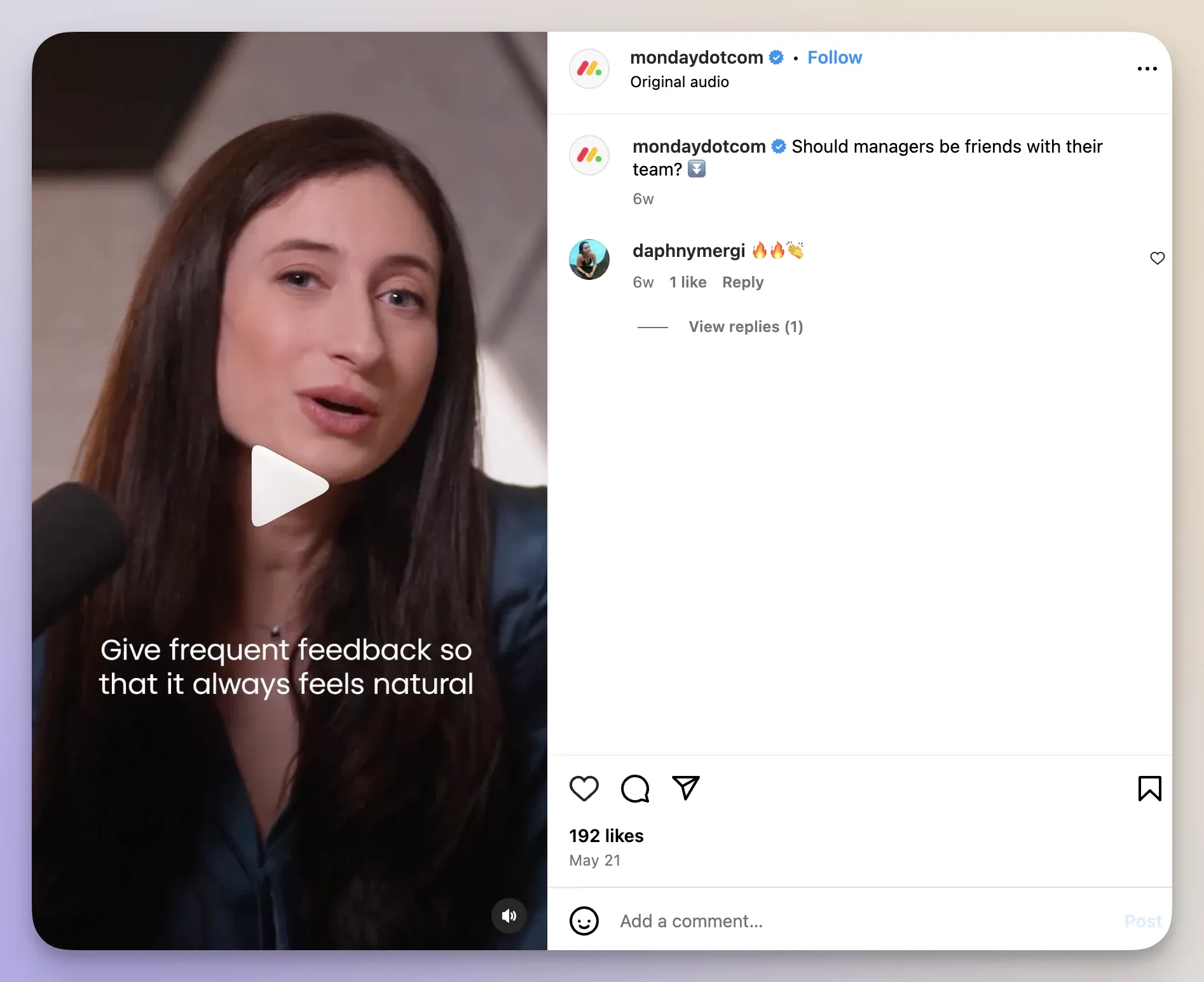
This is where a brand can turn values into something visible. A mission statement is abstract. A reel can show the people, process, and decisions behind it. That is why reels often outperform static content when the goal is to make the brand feel memorable, not just informative.
A strong reel here usually has one clear point:
- The culture the team wants to signal.
- The problem the brand solves.
- The perspective that makes the company different.
Present Products Or Services
Use reels for products or services when the audience needs to see the value, not just read about it. Reels are the best format for demos, use cases, and before-and-after proof.
That is where video marketing strategy matters. A reel can show a workflow, a feature, or a result in motion, which often makes the benefit easier to understand than a caption or a static graphic. For brands with complex offerings, a short demo reel can do more work than a long explanatory caption.
Keep the structure simple:
- Show the problem.
- Show the product in use.
- Show the outcome.
- End with one action.
Highlight Influencer Partnerships
Use reels for partnerships when social proof is part of the message. Reels make creator collaborations feel more native, more visible, and more shareable than a quick story mention.
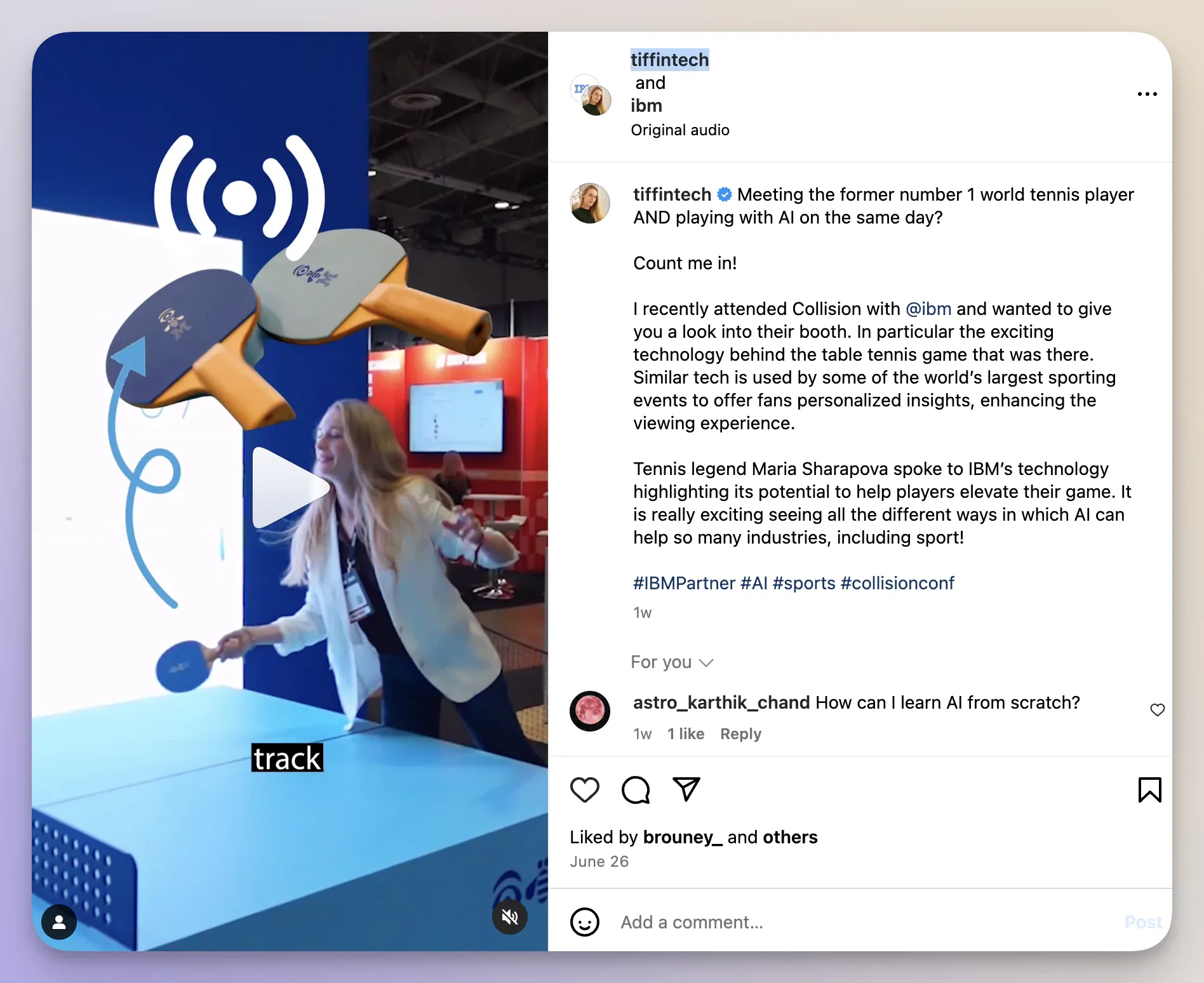
A reel is especially useful when the creator can demonstrate a product in their own style. That combination tends to outperform a heavily scripted brand post because the audience sees a real voice, not just a branded endorsement. If the partnership is meant to build trust and reach, reels usually do that job better than stories.
Pro Tips For Great Performing Reels
Use a reel when the content can hold attention for more than a few seconds and still feel useful later. The best reels are not just short; they are intentional.
A few practical rules help:
- Keep the first line or frame clear.
- Use subtitles for silent viewing.
- Make one point per reel.
- Test a 60 to 90 second version before stretching longer.
- Keep the visual pace moving.
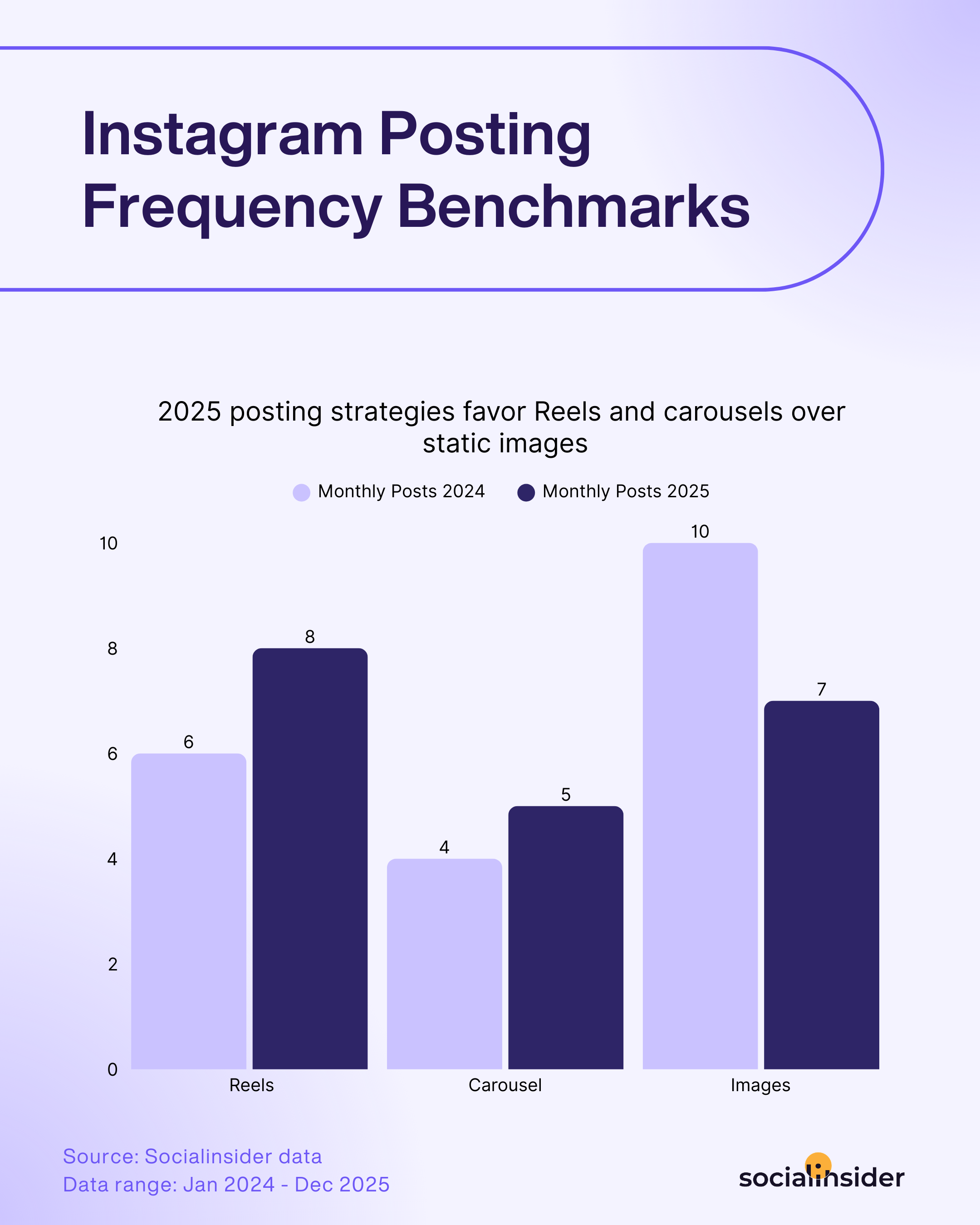
Consistency matters too. The exact cadence depends on team size and content capacity, but the bigger lesson from posting frequency benchmarks is that quality and repetition need to balance each other. A reel that works once is helpful. A repeatable reel format is better.
When To Choose A Story
Use a story when the message needs to feel immediate, interactive, and close to the audience. Stories are the format for quick feedback, time-sensitive offers, and behind-the-scenes communication.
Stories are also the better choice when you want to speak with followers, not at them. Because stories disappear after 24 hours, the format naturally creates urgency and a lighter expectation of polish.
Get Audience Feedback
Use stories for feedback when the goal is to learn fast. Stories make it easy for followers to respond without a lot of friction, which is why they are so useful for testing ideas, collecting opinions, and gathering quick sentiment.
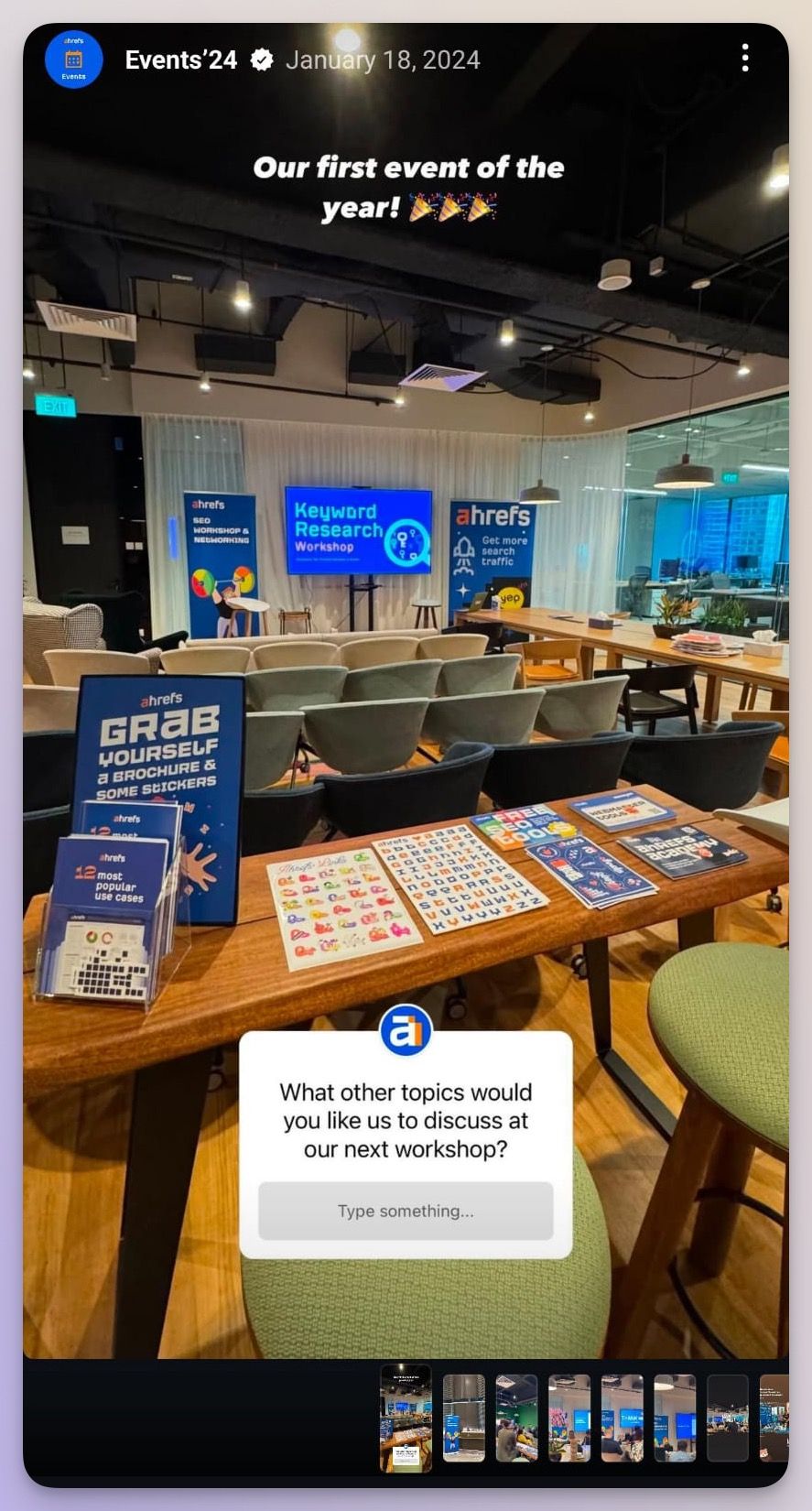
If your team is choosing between two headlines, two product concepts, or two creative directions, a story poll can give you a directional answer in hours instead of days. That is especially useful when social media goals include audience research, product input, or community-building.
Use stories for:
- Polls.
- Question stickers.
- Emoji sliders.
- Short reaction prompts.
- Link stickers tied to follow-up action.
Post Time-Sensitive Offers
Use stories for time-sensitive offers because the format matches the urgency of the message. A story works best when the audience should act today, not eventually.
Instagram Help Center confirms that stories last 24 hours, which makes them a natural home for flash sales, live event reminders, limited drops, and deadline-driven traffic. The current CTA should be a link sticker, not a swipe up, so the path to action stays simple.
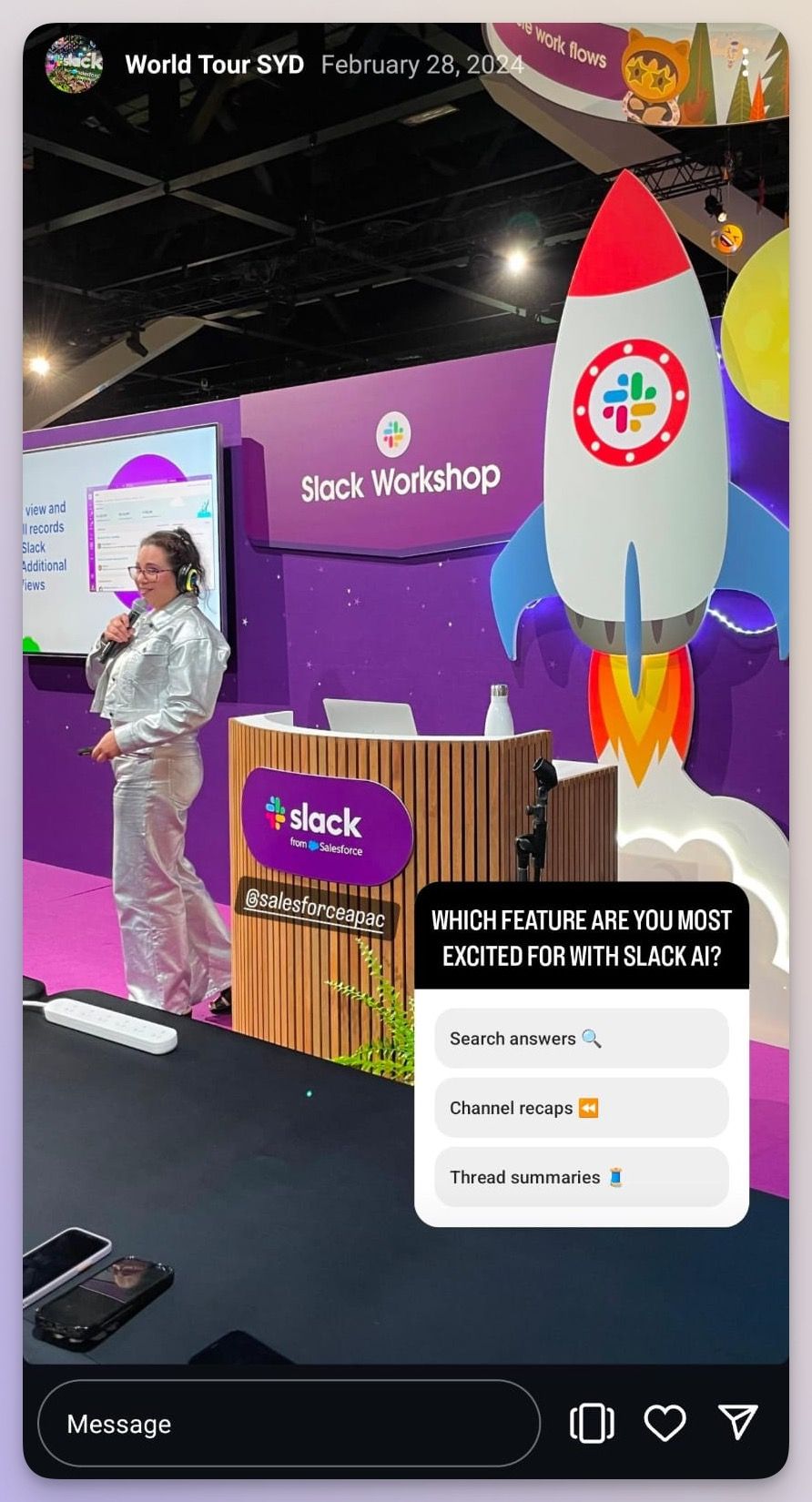
Stories also work well for resharing user-generated content, live updates, or a quick reminder that a launch is still open. If the content needs a short shelf life and a fast decision, stories are the right format.
Feature Behind-The-Scenes Content
Use stories for behind-the-scenes content when the goal is to feel real, not polished. Stories are the right place for raw moments, team snapshots, and process updates that would feel too casual for the feed.
A story can show the work behind a launch, a conference setup, a team brainstorm, or a quick milestone celebration. That makes the brand feel accessible without forcing the content into a long-form video structure.
The beauty of this format is that the content can be imperfect and still effective. In fact, a little roughness often helps the story feel more trustworthy because the audience is seeing the brand in motion, not in a polished campaign frame.
Pro Tips For Great Performing Stories
Use stories when audience response matters more than broad discovery. The best-performing stories are short, clear, and easy to tap through.
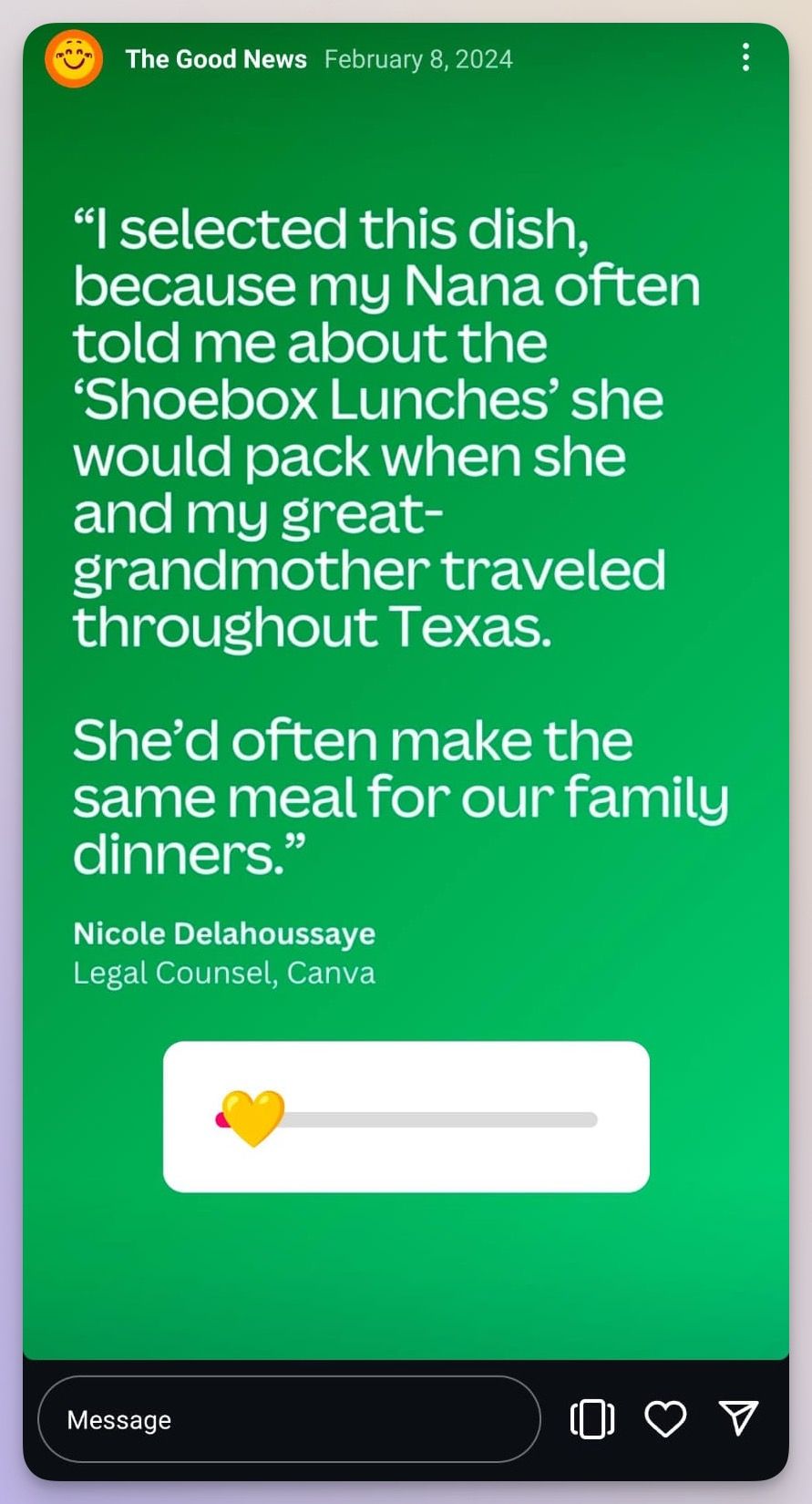
A few rules help stories perform better:
- Keep the message focused.
- Use one sticker per frame when possible.
- Avoid overcrowded layouts.
- Put text where the interface will not cover it.
- Save strong stories to highlights when the message deserves longer life.
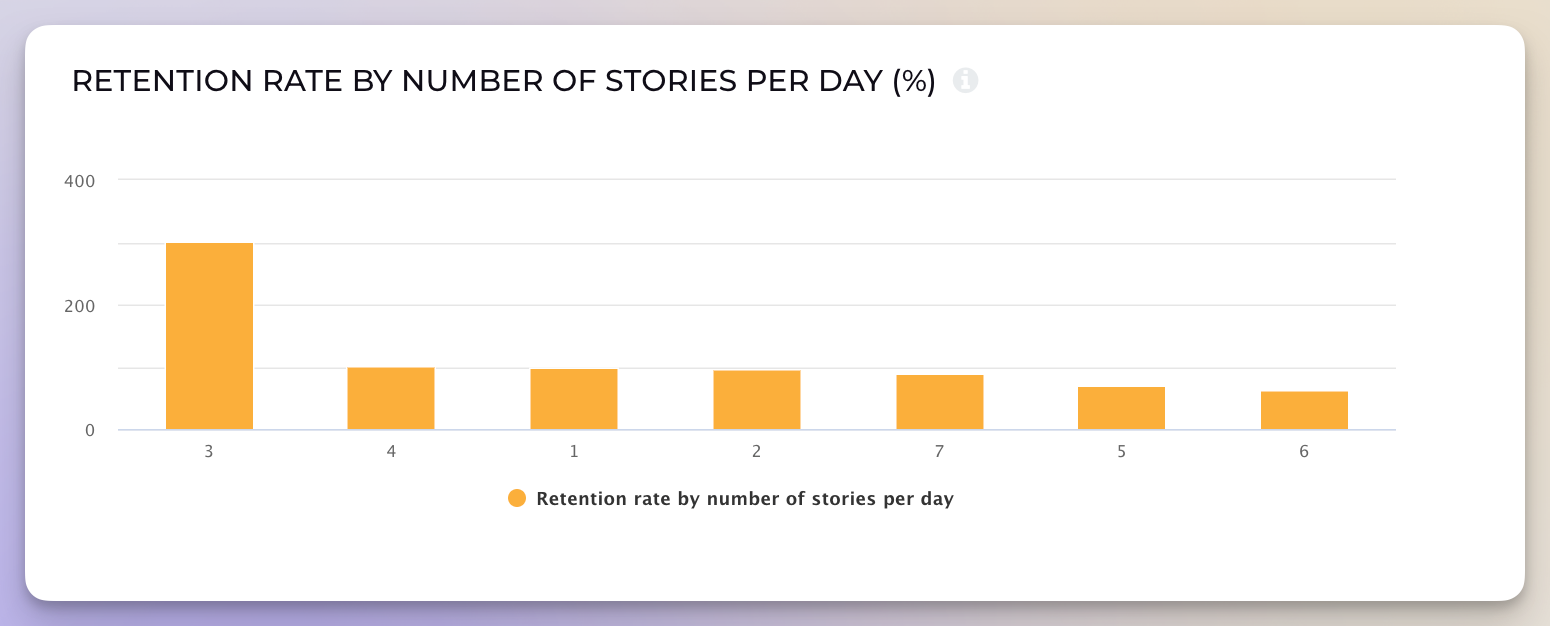
Socialinsider’s story guidance suggests that reaching 5 to 10 percent of followers is a reasonable baseline, while 15 percent plus is strong. That makes story retention worth watching closely. If viewers drop off fast, the story may be too long, too dense, or too repetitive. If completion holds, the message is probably aligned with audience interest.
How To Combine Reels And Stories
Use reels and stories together when one idea needs both reach and response. Reels can introduce the idea to a broader audience, and stories can turn that attention into conversation, clicks, or feedback.
That combination works because the two formats are not competitors. They are different stages of the same content journey.
Mix Evergreen And Real-Time Content
Use reels for the evergreen version of the story, and use stories for the live version. A reel can explain the core idea, while a story can show what is happening right now.
For example, a launch reel can stay on the profile as a durable asset, while a story can capture the day-of energy, team reactions, or a quick reminder to act before the deadline passes. This is the simplest way to keep a campaign efficient without repeating the same creative everywhere.
Engage And Educate Together
Use reels to teach and stories to talk back. That combination gives you the best of both worlds.
A tutorial reel can explain the steps, then a follow-up story can ask, “What would you want to see next?” or “Which part should I break down further?” That sequence helps brands avoid the common trap of creating educational content that informs but never invites a response.
If you want to measure which parts of the mix are doing the most work, social media engagement is a more useful lens than vanity counts alone. Comments, replies, shares, and saves tell different stories, and those signals often matter more than raw views.
Share Top Performing Reels To Stories
Use stories to give a strong reel another chance to perform. That is one of the easiest ways to extend the life of a high-performing idea without making new content from scratch.
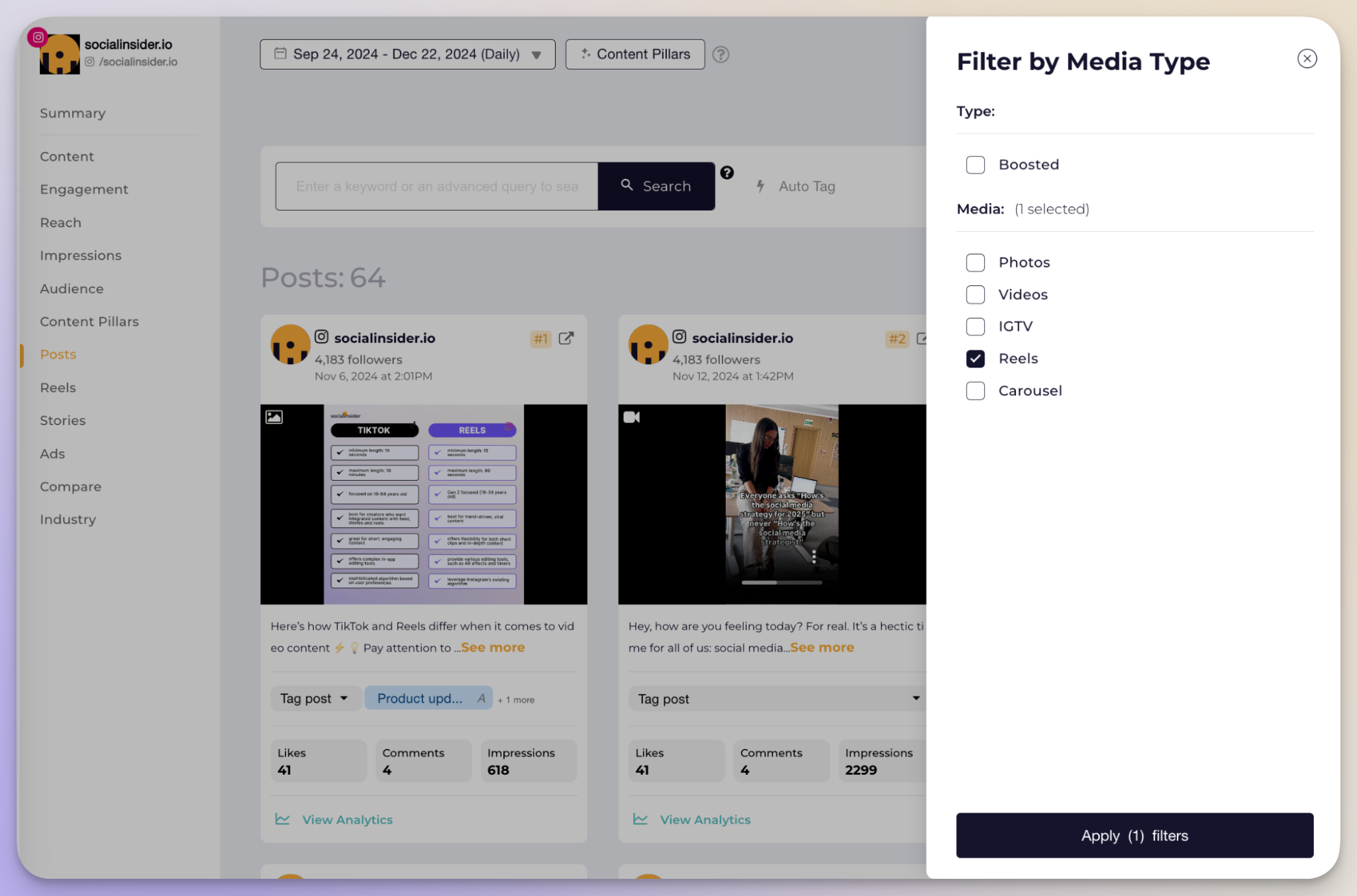
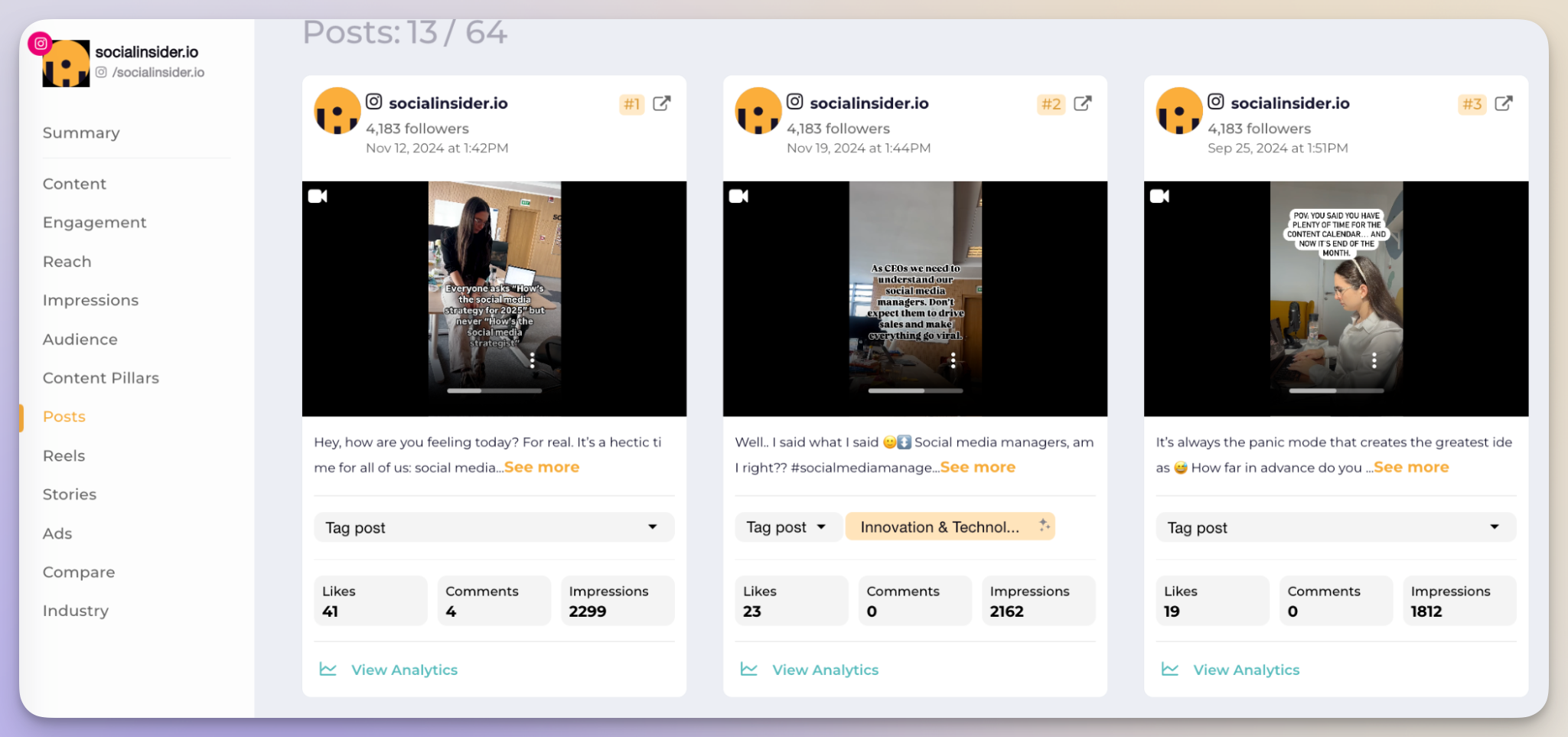
When a team can see the top reels clearly, the next move gets easier. Miruna Vocheci, senior social media manager at Socialinsider, said, “Before Socialinsider, the hardest part was consolidating data from multiple platforms manually. I would lose a lot of time searching, then analyzing. The fact that I had to watch my competitors' performance without having a clue about the real numbers behind every post was also a major pain point. A lot of decisions were based on gut feeling rather than data.” That same logic applies to format choice: the more clearly you can see what works, the easier it becomes to decide whether a reel should stay a reel, become a story, or do both.
Quick Decision Framework
Choose a reel if the goal is discovery, longevity, or education. Choose a story if the goal is urgency, feedback, or daily relationship building. Choose both if the idea needs reach first and response second.
Here is the fastest way to decide:
- Choose a reel if the topic can help strangers understand the brand.
- Choose a story if the topic should feel timely, personal, or temporary.
- Choose a reel if the content can stay useful for weeks or months.
- Choose a story if the content should disappear after the moment passes.
- Choose both if one asset can work as a discovery layer and a follow-up layer.
If your team is planning a broader content mix, the same logic applies to a post, story, and reel decision. A feed post usually works best for static reference content, a reel works best for discovery, and a story works best for interaction. The right format is the one that matches the job, not the one that feels most familiar.
FAQ
What Is An Instagram Reel Vs Story?
An Instagram reel is a discoverable video format built for reach, saves, and longer shelf life. An Instagram story is a temporary, interactive format that disappears after 24 hours unless saved to highlights. Reels are better for education and visibility. Stories are better for feedback, updates, and quick action.
Do Reels Get More Engagement Than Stories?
Reels usually get broader engagement because the format reaches beyond followers and can keep circulating after publication. Stories usually create stronger immediate interaction from existing followers through replies, polls, link stickers, and taps. Socialinsider’s benchmarks show reels and stories should be judged differently because each format serves a different audience behavior.
Should Brands Post Both Reels And Stories?
Brands usually benefit from both formats. Reels help new people discover the brand, while stories help warm followers respond in real time. A simple workflow is to publish the reel first, then use stories to ask a question, share a reminder, or repost the strongest clip. That keeps production efficient without duplicating strategy.
What Features Distinguish An Instagram Story From A Reel?
A story includes polls, question stickers, emoji sliders, link stickers, and highlights, and it disappears after 24 hours unless saved. A reel supports longer video, remix-style collaboration, subtitles, audio choices, and discovery surfaces inside Instagram. Stories are more interactive and temporary. Reels are more searchable and evergreen.
How Does Audience Interaction Differ Between Instagram Stories And Reels?
Audience interaction in stories is usually immediate and low friction. Followers tap, vote, reply, or click a link while the content is still fresh. Audience interaction in reels is usually slower and broader. People like, comment, save, or share the reel after discovery. Stories create direct conversation. Reels create distributed reach.
Final Thoughts
If the goal is discovery, start with a reel. If the goal is interaction, start with a story. If the idea is strong enough to do both jobs, split the content so each format can do what it does best.
That is the cleanest way to make format choice part of your social media strategy instead of an afterthought. If you want a faster read on which format is actually driving views, engagement, and reach, Socialinsider can help you compare your own performance without the manual spreadsheet work that slows teams down.
Leave a Reply